
Flyers vs. Postcards vs. Brochures: Which Should Your Business Choose?
Compare flyers, postcards and brochures by message space, distribution, typical uses and file requirements before choosing your business printing.
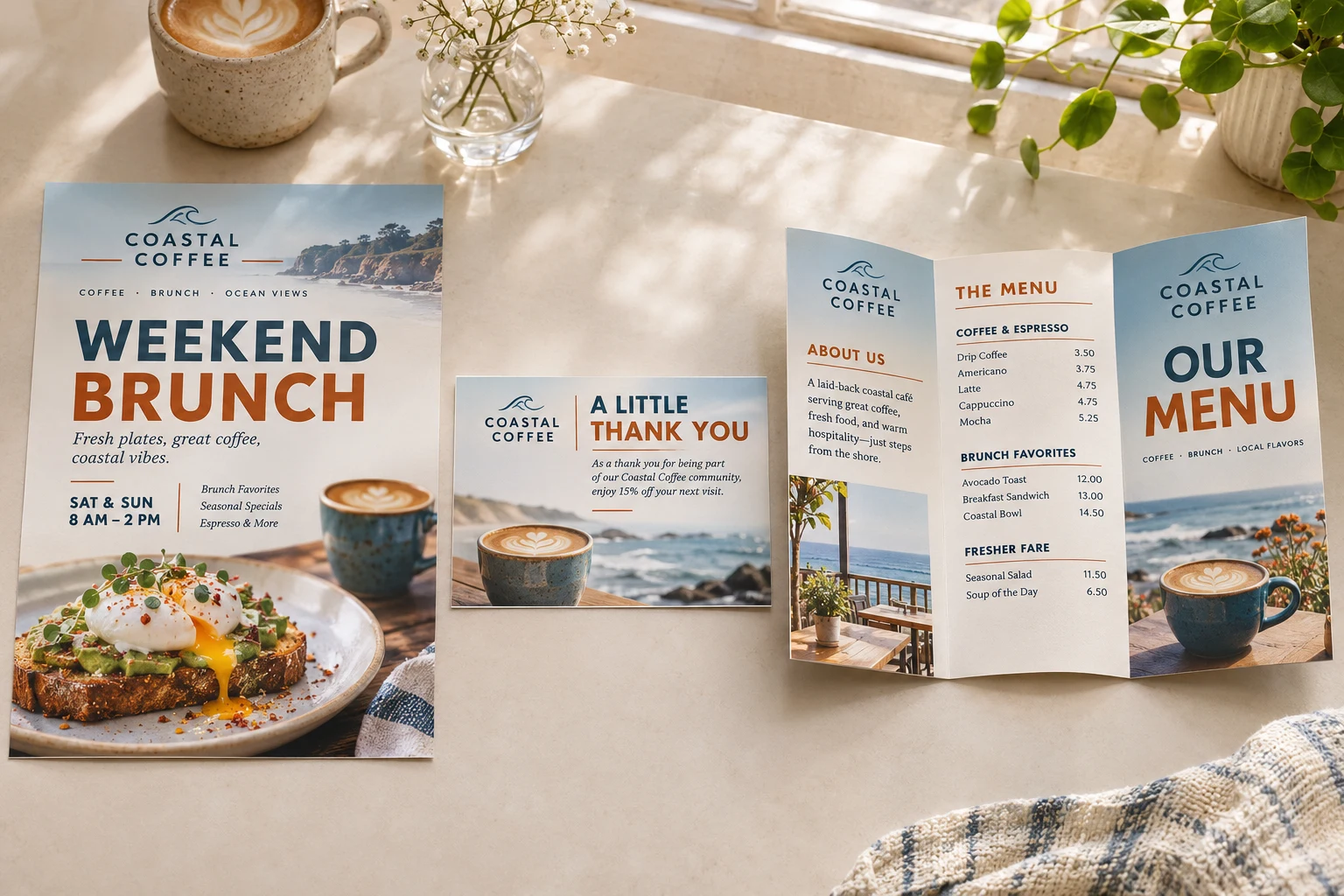
The right printed piece depends on what you need to say and how it will reach customers. A flyer can explain an event at a glance. A postcard can put a compact offer into someone’s hands or become part of a mailing. A brochure can guide a reader through several services or choices.
Start with your message and distribution plan—not a template. Here is how to choose between flyer printing, postcard printing and brochure printing, and what to prepare before requesting a quote.
The quick choice: one announcement, one offer or a fuller explanation?
- Choose a flyer for an event, promotion, real-estate handout or information sheet that works best on a flat page.
- Choose a postcard for a short offer, reminder or announcement on sturdier cover stock, especially when you plan a mailing or compact handout.
- Choose a brochure when customers need organized sections: services, photographs, menu choices or a fuller introduction to your business.
There is no universal winner. A long service explanation squeezed onto a small postcard becomes hard to read; a six-panel brochure may be unnecessary for a simple event announcement. Choose the smallest practical format that gives your message enough room.
Flyers: flexible space for a clear announcement
A flyer is typically a flat sheet with a headline, supporting details and a next step. An 8.5 × 11 inch sheet gives you space for a photograph, event information or a short service list without asking the reader to unfold anything. One side may be enough; a second side can hold supporting information.
Flyers work well at a counter, in shopping bags, at an event or on a noticeboard where posting is permitted. Typical uses include sale announcements, real-estate feature sheets, class schedules, restaurant promotions and community event details. Tell us how the piece will be used so the size and paper suit the job.
Text stock makes a lighter handout; cover stock creates a sturdier piece and changes the price. Our color and black-and-white copies page is useful for everyday sheets, while the flyer product page covers promotional sizes and stocks. If customers will read the message from across a room, consider a separately sized printed poster rather than enlarging a handout without checking the artwork.
Postcards: compact offers, reminders and mailings
Postcards put a short message on cover stock. Use the front for the main offer or image and the back for details, a response prompt or postal information. They can work as appointment reminders, thank-you pieces, product announcements, bag inserts or direct-mail promotions.
The key distinction is whether you will hand them out or mail them. A handout can use both sides for your message. An addressed mailing needs space for the address and other postal elements; EDDM has its own size and preparation requirements. Do not assume that every postcard size or layout qualifies for your intended mailing.
Have our addressing and mailing services check the format before you finalize the artwork. Postage, list work and mailing preparation are separate from the print price. For a neighborhood campaign, our EDDM versus targeted mail guide explains the difference between reaching carrier routes and using a selected address list; confirm current costs with your quote.
Brochures: organize a bigger message into panels
A brochure uses folds to guide the reader through sections. A tri-fold can separate an introduction, key services, photographs and contact details; a bi-fold offers larger panels for a simpler layout. The paper’s flat size is not the same as the finished folded size, so specify both.
Brochures suit sales leave-behinds, visitor information, service overviews, menus and take-home explanations. They are useful when someone needs more detail after a conversation, but should still be easy to scan. Put the main benefit or subject on the front and group related information rather than filling every panel with dense text.
Confirm fold style and panel widths before designing. Some fold layouts need an inset panel that is slightly narrower; three equal panels are not automatically right for every tri-fold. Our bindery and finishing services can help confirm folding and trimming. If your content needs several pages rather than a folded sheet, compare booklet printing.
Compare distribution before comparing price
- Counter or event handout: a flyer gives a quick overview; a postcard is compact and sturdy; a brochure offers a more detailed takeaway.
- Sales conversation: a brochure can explain options after the meeting, while a postcard can highlight one offer or next step.
- Noticeboard: a flat flyer is usually easier to display than a folded brochure. Ask permission before posting.
- Mailing: confirm format, address space, stock and postal eligibility before printing. A brochure may need an envelope or other preparation, depending on the mailing plan.
- Storefront promotion: pair a handout with a correctly sized sign or banner when you need visibility beyond the counter.
Include the whole campaign when comparing costs: design, printed sides, paper, folding or cutting, addressing, postage and shipping where needed. The lowest per-piece print price is not necessarily the lowest cost for the finished campaign.
Typical uses: three ways to approach the same business promotion
Imagine a café promoting weekend brunch. A flyer could show the hours, location and featured dishes. A postcard could carry a compact thank-you or return-visit offer. A folded brochure could organize a fuller menu and introduce the café. The illustration above shows that the same branding can serve three different purposes; it is not a claim about a completed customer project.
A service business might use a flyer for a seasonal announcement, a postcard for a neighborhood campaign and a brochure to explain its services after an estimate. Use the formats that support your actual customer journey rather than ordering all three automatically. Our commercial printing services can help coordinate a multi-piece project.
What should customers supply for each format?
For every item, supply the quantity, finished dimensions, number of printed sides, paper preference and date you need the finished pieces in hand. Include a print-ready PDF if available, plus the exact wording, contact details, logos and original photographs needed for any design work.
- Flyers: give the final flat size, one- or two-sided printing, and whether any trimming or folding is required.
- Postcards: supply separate front and back PDF pages. State handout or mailing, and have the address area and postal specifications checked before printing.
- Brochures: supply flat outside and inside PDF pages—not separate panels. Include flat size, finished folded size, fold type and agreed panel arrangement.
- All formats: explain whether the background reaches the edge. Confirm bleed requirements and allow safe margins for important text.
- Pickup or shipping: specify free Kingston pickup or UPS shipping, with the destination ZIP code and needed-by date.
If your artwork is in Canva, see printing from Canva and our Canva PDF export guide. Check photos and AI illustrations with Will My Image Print Clearly? If you need layout changes or a design built from your content, discuss graphic design and file preparation before production.
How to compare starting prices fairly
Compare like-for-like specifications. A one-sided flyer on text paper, a two-sided postcard on cover stock and a printed brochure sheet do not include the same materials or finishing. Check quantity, size, paper, printed sides and every additional service. Our printing price guide and the three product pages show the qualifying starting-price specifications; request a quote for your complete finished order.
Full-bleed designs may require oversized stock and trimming, adding cost. Brochure folding, paper upgrades, mailing work and postage should be confirmed separately rather than assumed to be included. Proofread offers, dates, contact information and QR-code destinations before approving the file.
We work toward consistent color, but results can vary between production runs, printing methods, papers and finishes. If color is critical, contact us before ordering to discuss proofing options.
When should you order?
Most jobs ship in 1–3 business days after required artwork, proof and pricing approvals. Same-day and rush service is available on many items — call or email for exact production availability. Shipping costs and UPS transit time are additional to production; allow mailing time separately for addressed mailings.
Allow extra time before production for writing, layout changes, proofs and any mailing checks. For a seasonal promotion, plan around when customers need to see the message—not simply the day the event starts. Our holiday printing checklist helps organize invitations, promotions and storefront information together.
Still deciding which format fits?
Tell us your audience, the message, how you plan to distribute the piece and the quantity. We can discuss a practical format and confirm pricing for the paper and finishing you need. You do not need to choose every specification before asking for help.
WE PRINT TODAY™ is at 66 Summer Street, Kingston, MA 02364. Pick up free at our Kingston shop, or have your order shipped UPS anywhere in the United States. Shipping time and cost are additional to production. See our contact and pickup information, call 781-585-6021, or fax 781-585-8201.
Describe your promotion, distribution plan, quantity and needed-by date. We’ll help you compare a flyer, postcard or brochure for the actual job.
Request a business printing quoteAlready have your format and artwork ready for production? Use Place Order with your complete printing instructions. Use Request Quote when you are still comparing pricing and options.